
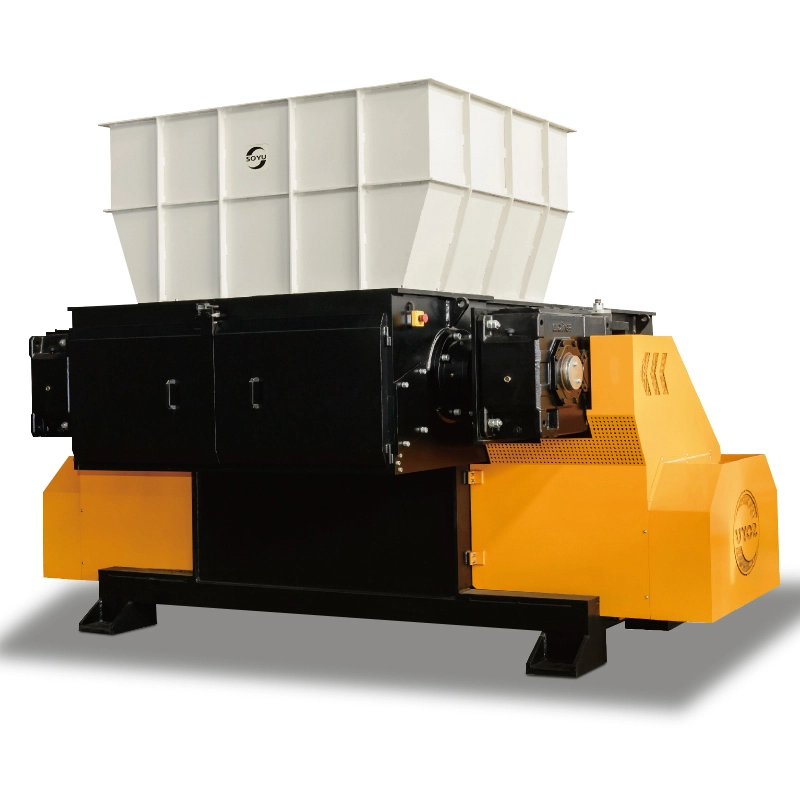
SINGLE SHAFT SHREDDER MANUFACTURER
Looking for a reliable Single Shaft Shredder? SOYU SR series offers high-performance size reduction for plastic, wood, and metal waste. Factory-direct price, CE certified, and customizable screens…
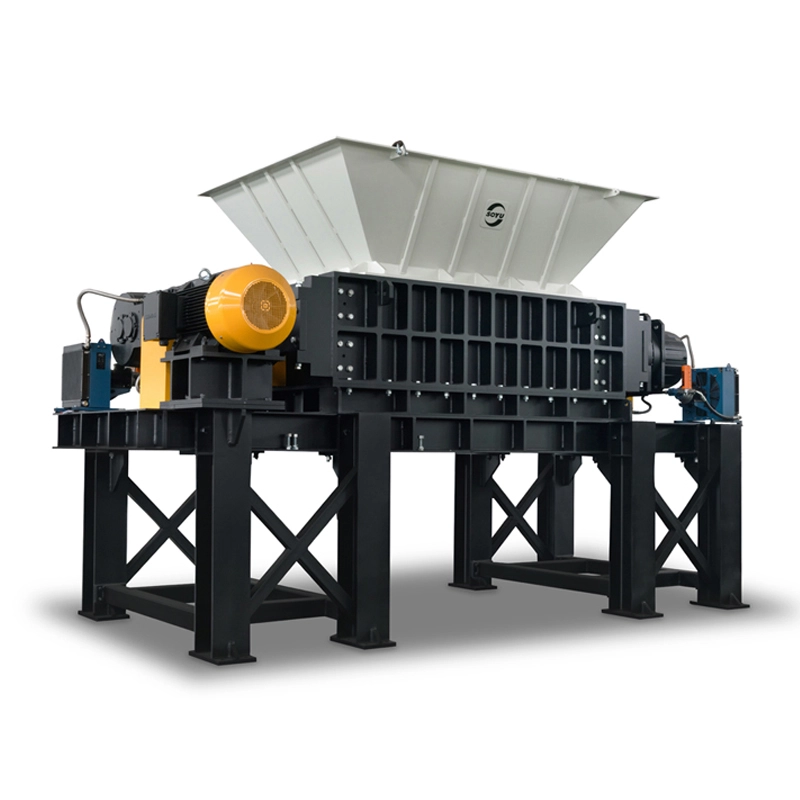
View productChoosing a shaft count is the first real decision in a shredding line, and it is far cheaper to make on paper than on the plant floor. This hub compares single, twin and four-shaft configurations across material, output size, throughput and wear, then drills into the twin shaft shredder in detail: drive options, blade metallurgy, ram logic and the questions worth putting to any supplier. For scrap metal, tires, MSW and RDF, hazardous industrial waste and bulky household items, the heavy-duty twin shaft industrial shredder is the configuration the rest of this page is built around.
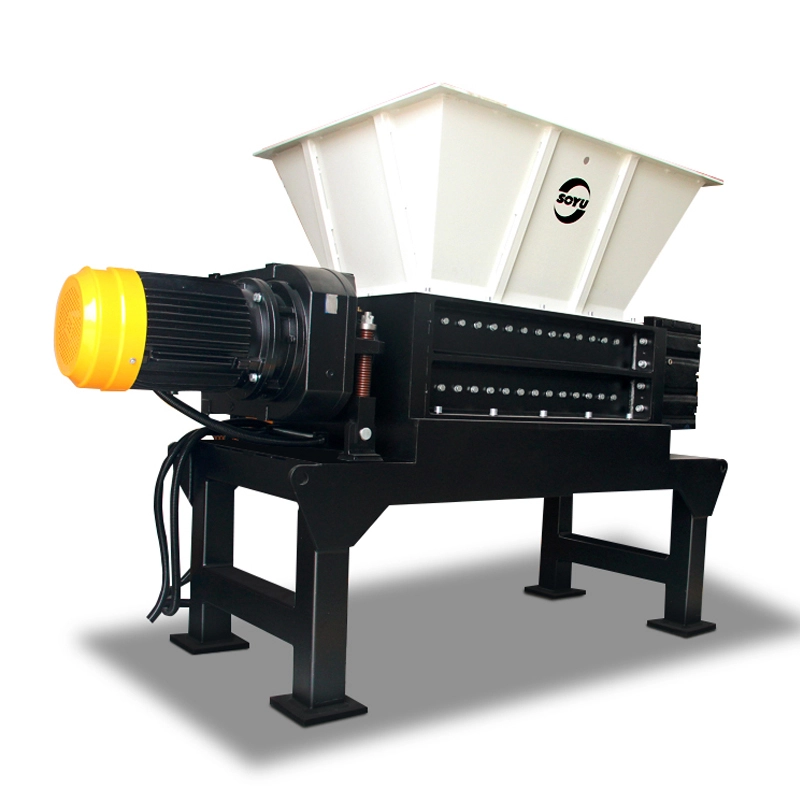
A twin-shaft shredder is a low-speed, high-torque dual-shear machine. Two counter-rotating shafts of intermeshing blades grab, tear and pull material down through the cutting chamber for immediate discharge. There is no sizing screen. It is not a single-rotor ripper, and it is not a screened granulator: output size follows from blade geometry and shaft speed, not from a screen aperture that can blind or clog.
That design choice is the whole reason the category exists. Because nothing holds material back against a screen, the machine keeps accepting mixed, bulky and contaminated feed — and it outperforms single-shaft models in high-capacity waste management, where continuous feeding without material pushers is the difference between a running line and a queue of skips.
Buyer decision: if you need a guaranteed particle size, plan a second stage behind the twin-shaft unit. If you need to survive unpredictable feed, the screenless chamber is the reason to buy this machine rather than a screened one.
Two questions do most of the work. Does your material sit on top of the blades instead of falling into them? And does it arrive in a shock load or a steady stream? Answer those and the configuration follows.
Plastic drums, IBC tanks, car shells, bulky containers and mattresses ride on top of the rotors and slip instead of being drawn in.
Pallets, profiles, cardboard and pre-broken scrap fall into the chamber on their own and are carried through without a pusher.
On a stable electrical supply, the high-efficiency electric motor drive is the configuration to price first.
Unpredictable bales, heavy scrap and mixed industrial waste produce torque spikes that a lighter drive train will not enjoy.
Mixed municipal and commercial streams rarely need a defined output at the primary stage; they need volume moved without stoppages.
A screenless discharge will not promise a uniform particle in a single pass, and no blade geometry can be asked to.
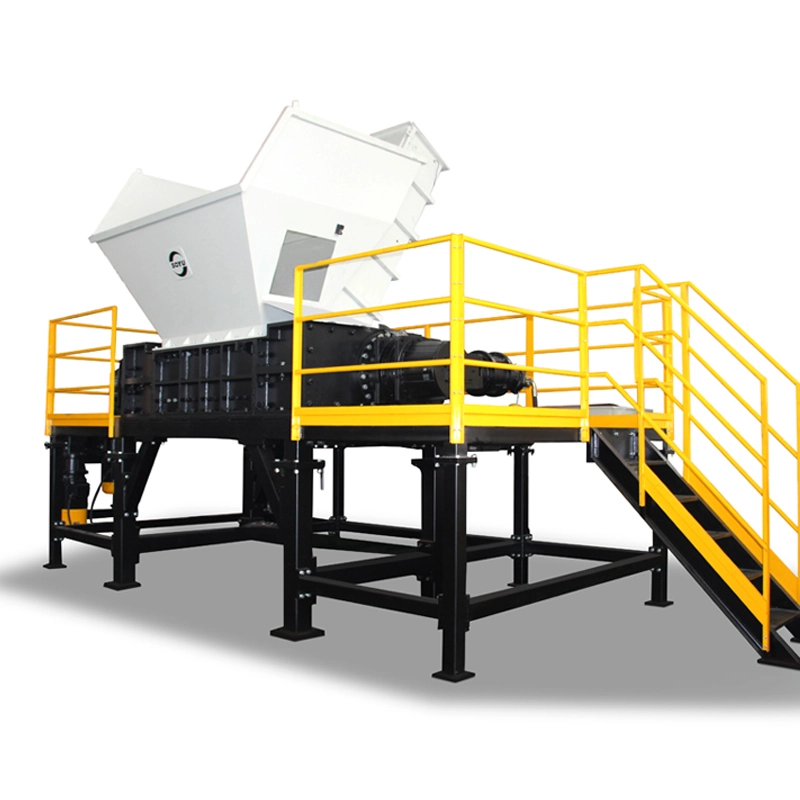
SOYU's hydraulic ram system is designed for large hollow products, and it does something a passive hopper cannot: it actively forces material into the rotating blades, eliminating slipping and idle running. The ram is synchronised with the Siemens PLC control system, so feeding pressure and stroke speed auto-adjust against motor load instead of running on a fixed timer.
For a buyer this converts into three practical outcomes. The chamber stays fed, so nameplate throughput is closer to real throughput. The machine stops grinding air when the chamber empties, so power draw tracks actual work. And because the ram responds to load rather than to an operator's timing, the heavy-duty construction is the part that takes the punishment instead of the gearbox.
Buyer decision: hollow feed plus a ram is a configuration choice, not an upgrade. If your material list includes drums, IBC tanks or car shells, treat the ram as part of the base specification and price it in from the start.
Four specification lines on the product page translate directly into uptime and maintenance cost. Read them as purchase decisions, not as features.
Blades are manufactured from CrMoV superior alloy steel and vacuum heat-treated for toughness and wear resistance. The intermeshing arrangement is what grabs, tears and shreds large material in the first place.
Decision: ask for blade refurbishment intervals against your specific feed, because abrasion rate — not the steel grade alone — sets your annual blade budget.The shredding chamber is lined with HARDOX™ wear-resistant steel plates, which extends service life and reduces maintenance costs on abrasive streams.
Decision: on metal-rich or grit-heavy feed, the lining is the difference between planned plate replacement and unplanned chamber repair.The reducer and rotor are connected via German industrial standard DIN 5480 splined shafts for reliable torque transmission and durability under extreme loads.
Decision: this is the interface that fails first on a weak machine. Specify the standard, then compare suppliers on it.A Siemens PLC-based control system provides automatic fault detection and overload protection, and it is the same controller that synchronises the hydraulic ram.
Decision: automation quality decides whether you can run unattended feeding. Ask what the PLC does when load spikes, not just whether a PLC exists.Buyer decision: when two quotes look similar, compare them line by line against these four points. Blade material, chamber lining, spline standard and controller brand are the items that are quietly substituted to hit a price.
The published capacity band is 1–30 tons per hour, and where your duty point sits inside that band is decided by your material, not by the machine's headline figure. Work through these measurements before you send an RFQ, and your supplier can quote a configuration instead of a range.
Start from the material you actually handle. Each row below gives the configuration to ask for, the evidence-based reason, and the point to confirm before you sign.
Twin-shaft with the hydraulic ram and a heavy-duty build. The ram is designed specifically for large hollow products such as car shells and IBC tanks, forcing them into the blades instead of letting them slip.
Twin-shaft with high-torque, low-speed cutting. Whole tires are bulky and springy, so the intermeshing blades need to grab rather than rely on gravity feeding, and the ram keeps the chamber loaded.
The primary shredding duty this machine is built for: continuous feeding, screenless discharge and bulk throughput that outperforms single-shaft models in high-capacity waste management.
Both streams are listed among the product's stated applications. Low-speed cutting and a securely fed chamber are why this category, rather than a high-speed mill, is normally specified here.
Hollow, light and awkward. Mattresses and bulky furniture are named as ram cases precisely because they resist passive feeding; appliances and e-scrap also suit the low-speed tearing action.
These fall into the chamber unaided, so the value sits in continuous feeding and screenless discharge rather than in a pusher. The listed material categories include wood and wood pallets, paper and cardboard, and plastic.
Aluminium and UBC, paper and cardboard, tire and rubber, plastic and plastic drums, RDF and MSW, wood and wood pallets, glass fiber and FRP, and e-waste — the published category list is broad enough that most buyers are really choosing a blade profile, a drive and a ram decision rather than a different machine.
Buyer decision: send your two hardest materials, not an average. A configuration that survives the worst 10% of your stream will handle the rest, and it is the only honest way to size a shredder.
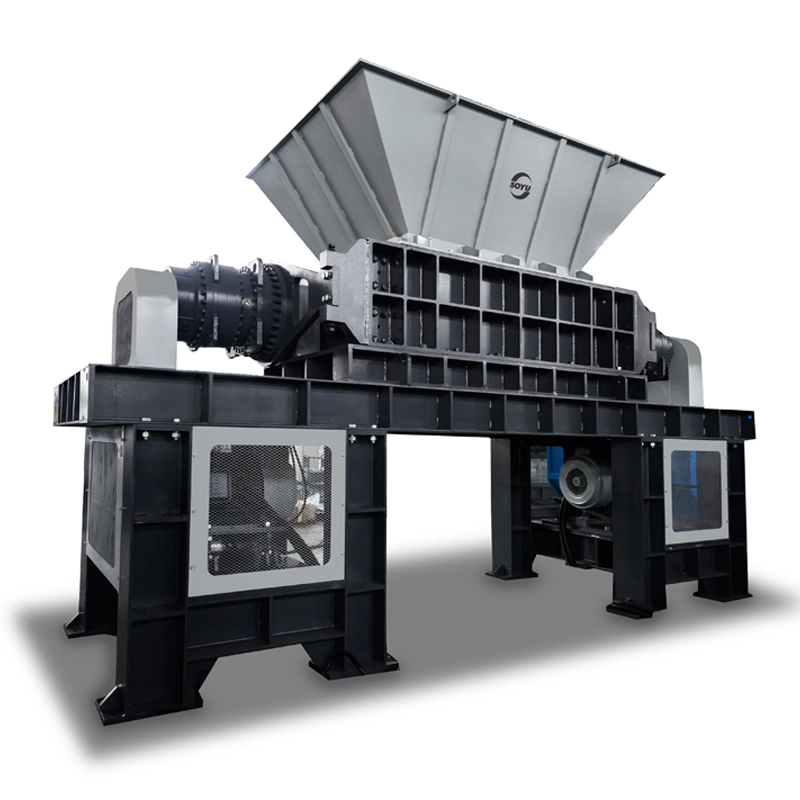
These are the figures published on the product page. Numbers that are not published here — model-level motor ratings, rotor diameter, installed dimensions — are confirmed against your duty point by the supplier rather than assumed from a catalogue.
| Product name | Twin-Shaft Industrial Shredder |
|---|---|
| Capacity | 1 – 30 tons per hour |
| Starting power consumption | 1.5 kW |
| Certification | CE, ISO 9001 |
| Drive options | High-efficiency electric motor or heavy-duty hydraulic drive, customisable to material handling needs |
| Cutting principle | Dual-shear: two counter-rotating shafts of intermeshing blades, immediate screenless discharge |
| Blade material | CrMoV superior alloy steel, vacuum heat-treated |
| Chamber lining | HARDOX™ wear-resistant steel plates |
| Shaft / gearbox connection | German industrial standard DIN 5480 splined shafts |
| Control system | Siemens PLC-based, with automatic fault detection and overload protection |
| Hydraulic ram (pusher) | PLC-synchronised; feeding pressure and stroke speed auto-adjust against motor load |
Buyer decision: use this table as the baseline. Any quote you receive should be readable against every row; where a row is missing, ask why before comparing price.
A supplier who receives the list below can quote a configuration instead of a range. Use the same list to interrogate any competing quotation.
Keep adjacent product options together for a faster catalog comparison.
Looking for a reliable Single Shaft Shredder? SOYU SR series offers high-performance size reduction for plastic, wood, and metal waste. Factory-direct price, CE certified, and customizable screens…
View product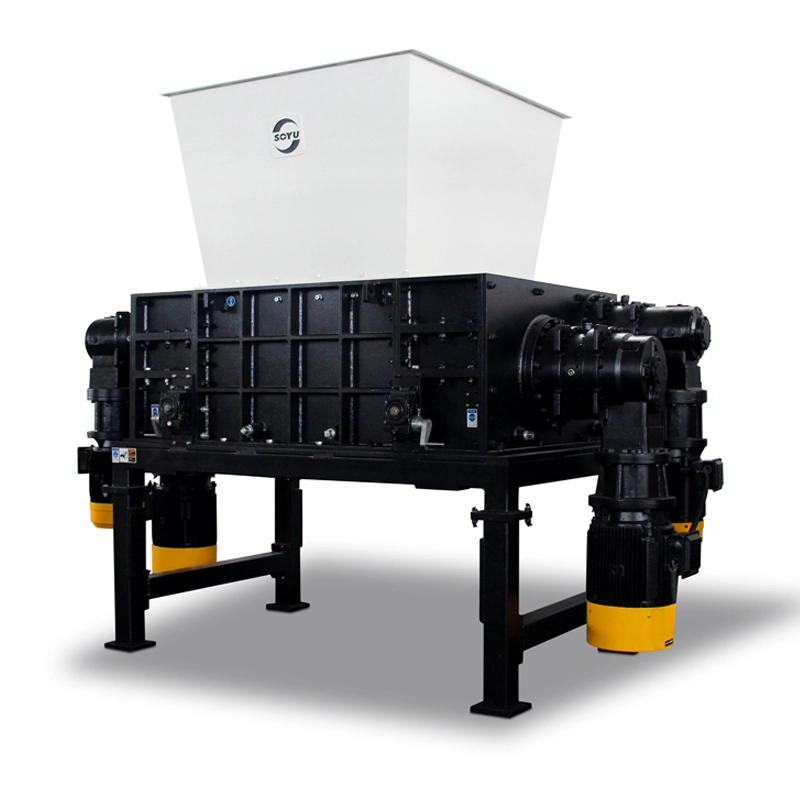
SOYU’s four shaft shredder ensures powerful shredding for tough wood waste and recyclables.
View product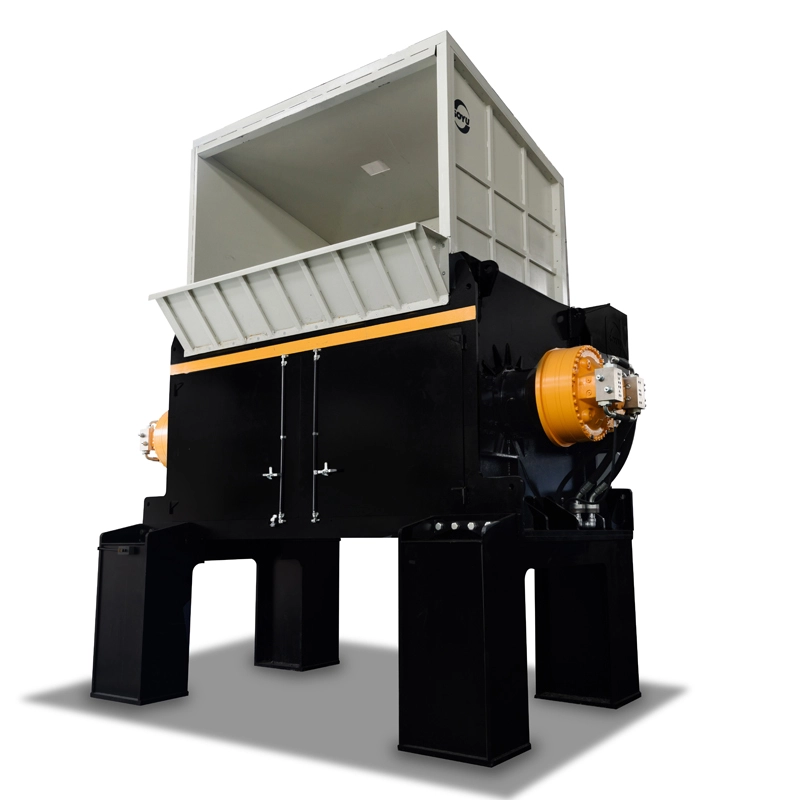
Single shaft shredders reduce bulky materials into small, consistent particles. The material size is reduced using a pusher system and shingle shaft rotary blades. The particle size is determined by…
View productit is a low-speed, high-torque dual-shear machine. two counter-rotating shafts of intermeshing blades grab, tear and pull material through the cutting chamber for immediate discharge. there is no sizing screen, so output size is set by blade geometry and shaft speed rather than a screen aperture. soyu publishes a capacity band of 1 to 30 tons per hour.
a single-shaft machine typically uses one rotor and relies on a screen or grate to hold material in the cutting zone, which gives a tighter and more consistent output. a twin-shaft machine cuts with two intermeshing shafts and discharges screenlessly, so it tolerates bulky, mixed and contaminated feed and significantly outperforms single-shaft models in high-capacity waste management.
on this machine the ram is designed for large hollow products — plastic drums, ibc tanks, car shells, bulky containers and mattresses — which would otherwise sit on top of the blades and slip. it actively forces material into the rotating blades, eliminating slipping and idle running. if your feed list includes any of those items, treat the ram as part of the base specification.
both are offered on the same machine and are customised to your material handling needs. the high-efficiency electric motor drive suits a stable power supply and steady duty; the heavy-duty hydraulic drive suits heavier duty and shock loading. if your feed is hollow or bulky, the ram decision usually matters more than the drive decision, because it is the ram that keeps the chamber fed.
blades are manufactured from crmov superior alloy steel and vacuum heat-treated for toughness and wear resistance. the shredding chamber is lined with hardox™ wear-resistant steel plates, which extends service life and reduces maintenance costs. the reducer and rotor are connected by german industrial standard din 5480 splined shafts for reliable torque transmission under extreme loads.
the published capacity band is 1 to 30 tons per hour, with a starting power consumption of 1.5 kw, and the machine is ce and iso 9001 certified. send your material mix, peak item size, target tonnes per hour and duty cycle through the contact page and soyu will come back with a configuration and a quote.

